
It was a Tuesday afternoon in Cincinnati. A woman named Lisa was stopped at a red light on I-71 when a Tesla Model S rear-ended her at 45 mph. The driver climbed out of the car looking genuinely confused. "It was on autopilot," he said, as if that explained everything — as if the car had simply decided on its own to destroy her rear bumper and give her the whiplash she'd feel for the next six months.
Here's what Lisa's insurance adjuster told her: the driver is responsible, case closed.
Here's what a personal injury attorney would tell her: not so fast.
The question of who is liable when a Tesla operating on autopilot or Full Self-Driving (FSD) causes an accident is one of the most contested legal issues in American personal injury law right now. And with over 8.5 billion miles now driven on Tesla's FSD system, it's a question that more and more people are asking — and needing answered.
First, Let's Talk About What Tesla Says
Tesla's safety data is genuinely impressive. According to Tesla's own reports, FSD (Supervised) records one major collision for every 5.3 million miles driven with the system engaged. For comparison, the average American driver has a major collision every 660,164 miles. Tesla claims FSD is seven times safer than a human behind the wheel.
The fleet has grown explosively: from just 6 million FSD miles in 2021, to 670 million in 2023, to over 4.25 billion miles in 2025 alone. In the first 50 days of 2026, Tesla owners drove another billion FSD miles. Elon Musk has said Tesla needs roughly 10 billion miles of training data to achieve fully unsupervised self-driving — and the fleet is nearly there.
These numbers are real, and they matter. A technology that is statistically seven times safer than human driving is worth taking seriously.
But here's the part of the story Tesla's press releases leave out: even rare failures happen at scale. If FSD logs 4 billion miles a year, and causes one collision every 5 million miles, that's roughly 800 collisions per year just from the FSD system. Real people. Real injuries. And very live questions about who pays.
If a Tesla on Autopilot or Full Self-Driving hits you in Ohio or Kentucky, you are not limited to a simple claim against the other driver. Under current law, three different liability paths may apply:
- Driver negligence – The driver is still the legal operator of a Level 2 vehicle. If they were distracted, misusing FSD, ignoring warnings, or using it in unsafe conditions (construction, poor weather, etc.), they can be held primarily responsible.
- Tesla product liability – You may have a claim that the Autopilot/FSD system was defectively designed, malfunctioned, or that Tesla failed to adequately warn about its limitations. In Ohio, these claims fall under the Ohio Product Liability Act (O.R.C. § 2307.71 et seq.); in Kentucky, under KRS § 411.300 et seq. Recent federal jury verdicts in Florida assigning one-third of fault to Tesla and awarding $243 million and $329 million show that juries are willing to hold Tesla accountable when evidence shows overstated capabilities and inadequate warnings.
- Shared liability (comparative fault) – Multiple parties can share fault. Ohio uses modified comparative fault with a 50% bar (O.R.C. § 2315.33): you can recover so long as you are 50% or less at fault, and your compensation is reduced by your percentage. Kentucky uses pure comparative fault, allowing recovery even if you are more than 50% at fault, with damages reduced proportionally.
Deadlines matter:
- Ohio – 2 years from the accident (or date of death in wrongful death cases).
- Kentucky – 1 year from the accident (or date of death).
Because Tesla vehicles record detailed data (Autopilot status, speed, braking, steering, sensor inputs), preserving that evidence quickly is critical. A lawyer can send preservation and data requests before logs are overwritten or lost.
What to do if a Tesla on Autopilot hit you
At the scene:
- Call 911 and get a police report; make sure it notes any statement that Autopilot/FSD was engaged.
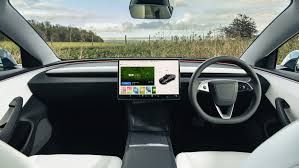
- Take photos of vehicle positions, damage, skid marks (or lack of them), road conditions, and, if visible, the Tesla’s interior display.
- Get names and contact information for all witnesses.
In the next 72 hours:
- Get medical care immediately, even if you feel “okay.” Whiplash and other injuries often appear later.
- Do not give a recorded statement to any insurer (including Tesla’s or the driver’s) before speaking with an attorney.
- Avoid posting about the crash on social media.
Because Ohio and Kentucky don’t yet have dedicated autonomous vehicle liability statutes, your case will be built under general negligence and product liability law. Outcomes turn heavily on the facts, the data from the vehicle, and whether your legal team understands how to frame Tesla’s role in the crash.
If you were injured in an accident involving a Tesla or any semi-autonomous vehicle in Ohio or Kentucky, you don’t have to navigate this alone. The attorneys at Gregory S. Young Co., LPA have decades of experience with motor vehicle accidents and are actively tracking the evolving Tesla and AV liability landscape.
You can learn more about our Cincinnati personal injury attorneys and motor vehicle practice here: https://www.younginjurylaw.com/motor-vehicle-accidents/
Or reach out directly for a free consultation here: https://www.younginjurylaw.com/contact/
We can help you secure the Tesla data, identify all responsible parties, and pursue the full compensation the law allows.
Were You Hurt in a Car Accidents Incident?
You may be entitled to compensation. Our attorneys offer free consultations — and you pay nothing unless we win your case.
- No fee unless we win
- Free consultations 24/7
- Serving Ohio & Kentucky since 1958
